Matt Daehler
Holding Out for a Hero ▸ Stiles Stilinski (2)Matt Daehler is a Beacon Hills student whose apparently minor presence conceals the central human agency behind the Kanima killings. Introduced as the boy almost inseparable from his camera, he gradually emerges as a watcher, an investigator of other people’s secrets, and finally the Kanima’s master. His decisive function in the story is to expose the difference between a weaponized body and the person directing it: Jackson Whittemore commits the visible violence, but Matt supplies the grievance, the targets, and the command.
Identity and Introduction
Matt initially appears as an ordinary schoolmate with an unusually conspicuous habit. He carries a camera everywhere, treating it almost like an appendage, and photographs the school and lacrosse games even when he is benched. The behavior is not entirely inexplicable—students may take candid photographs, and school photography clubs or yearbook staff provide familiar reasons for doing so—but Matt belongs to neither group. His camera therefore changes from a harmless accessory into a narrative question: what, precisely, is he recording, and why?
His first interactions with Carson Bradley and Allison Argent preserve that ambiguity. He compliments Allison’s dress, receives a reply about his camera, and then stares oddly at Carson while she gives him a forced smile. The exchange is socially ordinary on its surface, yet the camera makes Matt difficult to place. He is visible without being known, present at school and lacrosse games while remaining outside the recognized communities that would explain his presence there.
Matt’s apparent vulnerability also helps him pass beneath suspicion. During practice, Scott McCall trips him with a stick, sending him into a painful backflip and harsh landing. Matt then approaches Carson with an improbably cheerful manner despite having been smashed into the dirt, having discarded his helmet so that his hair points in several directions. He asks what she is doing at practice, and Carson identifies herself as Stiles Stilinski’s girlfriend while Stiles arrives and visibly reacts to Matt. The scene casts Matt as an awkward, perhaps comic outsider, a role that later becomes an effective disguise for someone capable of deliberate violence.
The Watcher Behind the Camera
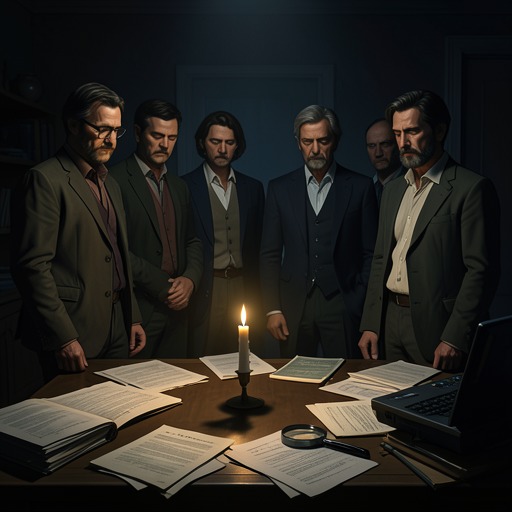
The camera’s importance deepens when the investigation turns toward missing footage. Matt Daehler is identified as the person who discovered that two hours of video had disappeared. To Carson Bradley, Stiles Stilinski, and Scott McCall, that fact becomes evidence rather than reassurance: the person who knows where the gap is may be attempting to direct suspicion away from himself. Stiles explicitly advances the possibility that Matt is manipulating the investigation by drawing attention to the missing material while concealing his own involvement.
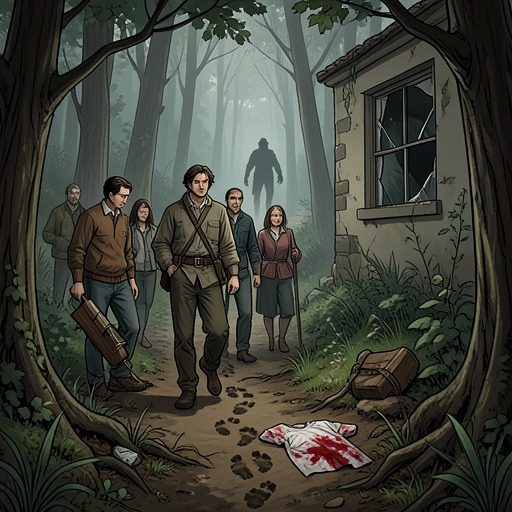
The suspicion gains support from a chain of physical and documentary clues. Security footage eventually shows a dark-haired male figure in a leather jacket moving toward Jessica; Carson recognizes the figure as Matt and orders the video stopped. Further records connect shoeprints with tire tracks at the trailer park, while an old credit-card receipt places Matt at the garage when the mechanic was killed. The former sheriff also identifies a possible connection between the mechanic and the murdered couple, and the group’s investigation treats the repeated association as a pattern rather than a series of isolated incidents. Matt’s camera, once merely strange, becomes part of a broader image of a person who gathers visual and circumstantial knowledge before acting on it.
The plot repeatedly positions Matt at the edge of scenes while leaving his purpose concealed. He returns Allison’s dropped tablet, but Mr. Harris takes it before anyone else can move and uses it to assign detention to Scott, Jackson Whittemore, and the others. Matt appears annoyed at being caught in the aftermath, a reaction that preserves his image as another student inconvenienced by school authority. In retrospect, such appearances acquire a double meaning: Matt is both participant and observer, close enough to incidents to know what happened but sufficiently unremarkable to avoid immediate scrutiny.
Master of the Kanima
Matt’s role becomes legible through Jackson Whittemore’s behavior. During a pool incident, Matt is thrown into the water and immediately begins thrashing, shouting that he cannot swim. He goes under in a mass of flailing limbs and bubbles until Jackson pulls him out. Jackson then glares at the others as though they had threatened someone under his protection, while Matt pushes past Carson Bradley and Scott McCall to escape. The contrast is unmistakable: Matt is physically helpless in the water, yet Jackson acts with sudden loyalty toward him.
That reversal reveals the master bond. Jackson is not simply an independent monster whose actions happen to benefit Matt; he is bound to Matt as an instrument. The story’s language makes the distinction explicit when Matt explains that Jackson is more a tool than a partner and compares himself to the power directing a fury. He describes the furies as deities of vengeance who punish crimes left unpunished, then identifies Jackson as his own fury. The mythology gives Matt a grand vocabulary for personal retaliation, transforming a high-school student’s grievance into a self-appointed judicial system.
Matt’s explanation also separates agency from appearance. Jackson’s claws, venom, and Kanima transformation make him the immediate physical threat, but Matt controls the purpose behind the attacks. The victims are selected according to Matt’s account of deserved punishment, and Matt states that the people he has killed deserved it. The claim converts murder into moral correction and attempts to erase the distinction between justice and revenge. Jackson’s body is made to carry out the punishment, while Matt preserves the position of judge, planner, and beneficiary.
Revenge, Control, and Hostage Crisis
Matt’s revenge is connected to a pattern of people who, in his view, committed crimes without receiving adequate punishment. The investigation identifies shared links among victims, and the group begins to understand that the killings are not random. Matt’s chosen targets therefore function as a private case file: each death is presented by him as the settlement of an old account. The logic is coercive because Matt does not merely condemn the targets; he compels Jackson to enact the sentence.
When the truth is exposed, Matt abandons concealment and uses direct force. He forces Carson Bradley down a hallway with a gun pressed against her back, intending to take Carson, Stiles Stilinski, Scott McCall, and others hostage. Carson experiences the gun as an immediate threat to her life and recognizes that resistance is no longer freely available. Matt pushes her into an office, follows with the weapon hanging between his fingers, and uses another shove to send her toward Stiles. Stiles pulls Carson between himself and Scott while Sheriff Stilinski rises from his seat and tries to persuade Matt that the situation can be resolved without a gun.
Matt’s response preserves the story’s central irony. He agrees that a solution exists but treats the adults’ assumption of rational resolution with condescension. The boy who previously appeared socially awkward now controls the room through a gun, a hostage arrangement, and Jackson’s supernatural violence. His authority is not innate; it is assembled from surveillance, leverage, and the Kanima master bond. Once those instruments are threatened, the hidden observer becomes an overt captor.
Relationships and Moral Fracture
Matt’s relation to Jackson Whittemore is defined by instrumental control rather than mutual equality. Jackson is described as Matt’s fury and as a tool, which reduces a person transformed into the Kanima to the function Matt needs. Yet the bond is not presented as simple mechanical control: Jackson’s behavior around Matt carries the visible force of loyalty, and Matt relies on that loyalty to survive and to compel violence. The relationship therefore combines dependence with domination. Matt needs Jackson’s body and supernatural capacity, while Jackson’s actions are organized around Matt’s commands.
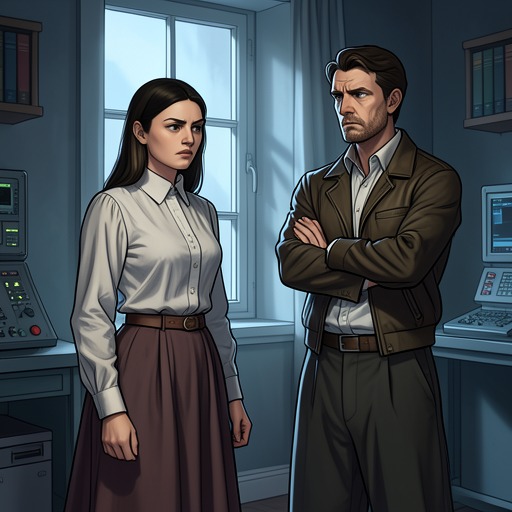
His connection to Carson Bradley is marked by an older asymmetry of perception. Matt says that Carson never noticed him and remembers her as a popular girl who would not normally go out with someone like him. He claims to have liked her from seventh grade through eighth grade and freshman year, imagining that they might have had a chance because she did not care about status and remained friends with Stiles Stilinski and Scott McCall. Carson is stunned by the confession because Matt’s long-standing attachment was built around an image of her rather than knowledge gained through a real relationship. His sense of being overlooked becomes part of the emotional material from which he constructs grievance.
The contrast between Matt’s imagined intimacy and Carson’s actual response is crucial. He interprets her social choices as evidence that she might eventually choose him, while she recognizes that he had never truly met or understood her. His attachment is therefore not only unreturned but idealizing: Carson becomes a symbol of the recognition he believes he was denied. The camera and the fixation operate together, turning another person into something to observe, interpret, and possess rather than someone whose autonomy must be respected.
Matt’s pursuit of punishment also exposes a broader moral fracture. He insists that his victims deserved death, but the story places his declaration beside the consequences of using Jackson as an instrument and taking teenagers hostage. His account offers an explanation for the killings without making the violence innocent. The language of the furies supplies Matt with a mythic mask, but the mask cannot conceal the ordinary coercion beneath it: he chooses targets, controls a transformed person, and threatens others with a firearm.
Narrative Role and Ending
Matt Daehler’s narrative role is built through delayed recognition. The first clues are small and socially plausible: a camera at his side, unusual interest in school and game photography, the missing footage, irritation at being interrupted, and an apparently harmless presence near the investigation. Each detail becomes more consequential only after the pattern is assembled. The structure makes his revelation feel less like a sudden transformation than a reclassification of everything already seen.
His exposure also clarifies the story’s distinction between knowledge and power. Matt gathers information through images and records, but knowledge alone does not make him dangerous. He becomes dangerous when he turns that information into a system of punishment and gives Jackson the role of executor. The camera represents observation; the Kanima represents force; the hostage crisis joins the two by showing that Matt can move from watching events to controlling bodies.
By the end of the main story, Matt is remembered not as the awkward boy who fell during lacrosse practice but as the concealed source of the Kanima’s vengeance. Stiles Stilinski repeatedly insists that Matt was evil, and Scott McCall acknowledges that Stiles’s suspicion was correct. The group leaves Lydia Martin’s party after the revelation, trying to process the fact that the seemingly peripheral student had been directing the violence. Matt’s arc consequently turns invisibility into menace: he is most threatening not when he first appears monstrous, but when his ordinary school persona is revealed as the surface of a sustained campaign of surveillance, control, and revenge.